
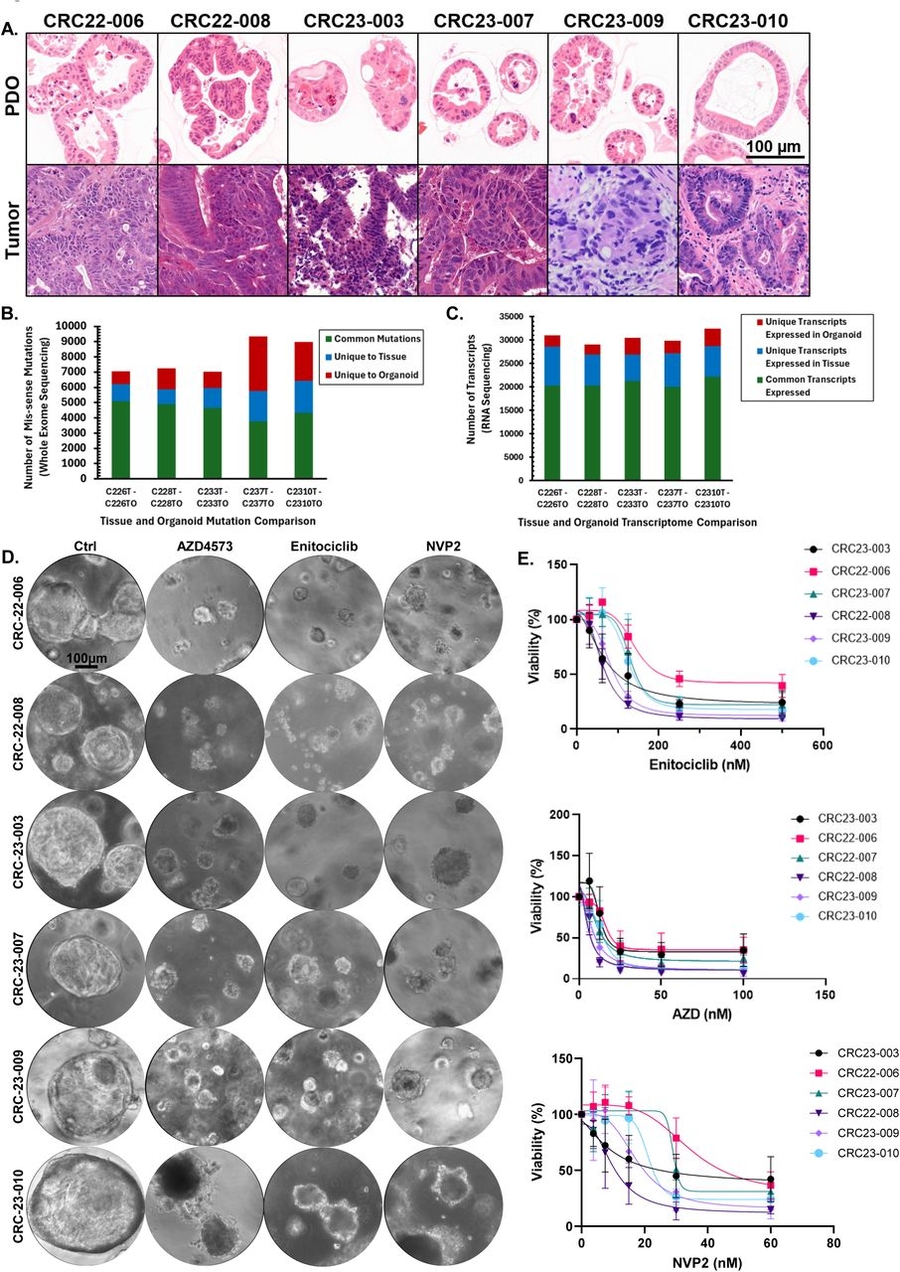
Our lab investigates the role of cyclin-dependent kinase 9 (CDK9) in driving oncogenic transcription and therapeutic resistance in colorectal cancer (CRC). CDK9 regulates RNA polymerase II–mediated transcriptional elongation and sustains expression of key survival genes. Recent studies demonstrate that selective CDK9 inhibition suppresses tumor growth, induces apoptosis, and attenuates MAPK pathway signaling in CRC models, including patient-derived organoids (PDOs). Building on this work, we explore how CDK9 blockade disrupts transcription–signaling crosstalk and how this vulnerability can be therapeutically exploited. Combining CDK9 inhibitors such as AZD4573 and Enitociclib with MAPK pathway inhibitors yields strong synergistic activity, suggesting a promising avenue for drug development. By integrating mechanistic, genomic, and pharmacologic analyses, our goal is to define biomarkers of response and advance CDK9-targeted combinations toward clinical translation. This research exemplifies our broader focus on leveraging transcriptional dependencies to develop more effective therapies for patients with colorectal cancer.
Targeting CDK9 to Improve Outcomes in Colorectal Cancer: Translating Transcriptional Vulnerabilities into Therapy
Add a Call to Action here
What do you want your site visitor to do next? Maybe you'd like to include an invitation to join the team, or an invitation to collaborate with you or sponsor your work . Update the "Learn More" link to be more descriptive and point to the correct page. Note that this will appear at the bottom of all templated pages. You can also use this section for something else and remove the Learn More link below.